
8 Ways To Save Money With Guinea Pigs
Keeping guinea pigs can be expensive. Aside from the upfront supply cost, you’ve got ongoing expenses like bedding, hay, pellets, and vegetables.
However, there are a few ways you can cut down on these costs and reduce your guinea pig-related budget.
None of these ideas require skimping on your guinea pig’s care or cutting out the essentials. There are so many ways you can save a bit of money, often while improving your guinea pig’s life. So, let’s jump right in!

1. Buy Hay in Bulk
Buying hay in bulk is one of the best ways to save money with guinea pigs. Bags of hay in pet stores are quite small and pretty expensive for what you get. Buying boxes of hay online or purchasing by the bale gives you a much better bang for your buck.
Where to Find Hay in Bulk for Guinea Pigs
You can find hay for sale by the bale from local farmers. You may also be able to find a small business near you that sells hay specifically for small pet owners.
These companies typically offer pesticide-free 100% timothy hay that is perfectly suited for small animals, and they often deliver right to your door.
Check your local classifieds ads and Facebook marketplace in your area and see what you can find. You may also be able to find hay in bulk for small animals by doing a Google search for “guinea pig hay” + your area.
In addition, you might be able to find suitable hay for guinea pigs at Tractor Supply or other farm stores in your area. Look for hay that is horse quality (not cow), sun-dried, and pesticide free.

Choosing the Right Type of Hay for Guinea Pigs
When searching for hay in bulk, look for hay that is advertised as timothy or orchard grass hay. Avoid anything that has alfalfa hay mixed in. Alfalfa hay is fine for young guinea pigs (under 6 months), but it has too much calcium content for adult guinea pigs. Too much calcium in your guinea pig’s diet can cause bladder stones, which often require surgery to remove.

Hay by the bale is usually sold as either 1st cut, 2nd cut, or 3rd cut hay. The main difference between these is the coarseness and nutrient content.
1st cut will usually consist of longer, thicker strands of hay, while 2nd cut is made up of finer, softer strands of hay. 3rd cut is even softer, having more of a grass-type texture. 1st or 2nd cut hay is most common and these are both suitable for guinea pigs.
2nd cut is good for fussy guinea pigs, as they usually like it better. However, 1st cut contains more seed heads that guinea pigs love and its thicker texture helps wear down teeth faster.
You can read more about choosing the right types of hay for guinea pigs here.
Buy Guinea Pig Hay in Bulk Online
If you cannot find any suitable bales of hay for guinea pigs locally, you can still buy your hay in larger quantities online. You can find bulk quantities of hay in 25 or 50 lb boxes through Amazon and Chewy. You can also save a few dollars extra each time by putting your hay on auto-ship. Small Pet Select also sells hay in any quantity up to 50 lbs.
How to Store Bales of Hay at Your Home
Now you may be thinking…. Once you have this 50 lb bale of hay at your home…. Where do you store it?
Hay needs to be stored somewhere dry, but that doesn’t necessarily have to be in your home. If you have a garage or shed, these are perfect places to keep a bale of hay. They can also be stored in a bin on a porch, deck, balcony, or somewhere else outside.
If there is not enough shelter from the elements, you can cover the bin with a tarp to make sure it stays dry. It could also be placed in a mudroom, large closet, or basement if you don’t have outdoor space.
I store my hay in a large plastic storage container. The bin that I have is 208 liters and measures 45″x20″x19.5″. This bin fits a full bale of hay perfectly. I’ve seen other people use large outdoor garbage bins to store their bales of hay as well.

You will likely want a smaller container to keep some hay readily available in the house as well. I saved an old oxbow hay bag for this purpose and simply refill it with hay from outside as needed.
2. Save Money on Guinea Pig Pellets
Pellets contain important nutrients and extra vitamin C, which is important to prevent health problems such as scurvy in guinea pigs. However, if you’re feeding a high-quality pellet food, your guinea pigs should only need about 1/8 cup of pellets per day to meet this requirement.

Oxbow pellets also come in bags up to 25 lbs. At 1/8 cup per day, a 25lb bag would last a very long time!
Oxbow is considered a higher-priced brand, but if you feed it as recommended, you’re actually saving a lot of money over the cheaper brands that are free-fed. Your guinea pigs will also stay a healthier weight if they can get all their nutrients from just 1/8 cup of food a day.
The only issue with buying 25lb bags is making sure the vitamin C content in the food doesn’t disintegrate over time. Make sure you read the instructions on the bag to store the food properly.
Normally if you keep the bag sealed, stored away from heat and light, and keep the food in its original bag, you’ll have nothing to worry about. If you only have 2 guinea pigs, a 10-pound bag will probably last you a long time as well, and it still costs less than buying the smallest bag.
3. Save Money on Vegetables
Vegetables for your guinea pigs can add up! It is typically recommended to feed your guinea pigs about a cup of veggies per day. It’s fine to feed your guinea pigs a little less than this, as long as they have unlimited access to hay and they’re getting enough Vitamin C in their diet.
Keep a list of vegetables that are safe for guinea pigs, and look out for veggies that are discounted each week at the grocery store.
Also, try to shop around for veggies that are on sale at different stores. You can also ask friends and family to save leftover vegetables that they would otherwise be throwing away.
If you have a small family-run shop or farm near you that sells produce, you could ask them about getting damaged or ugly vegetables for free or at a discount.
It may even be worth asking grocery stores if they would be willing to give you some wilted produce that may be thrown away anyway.
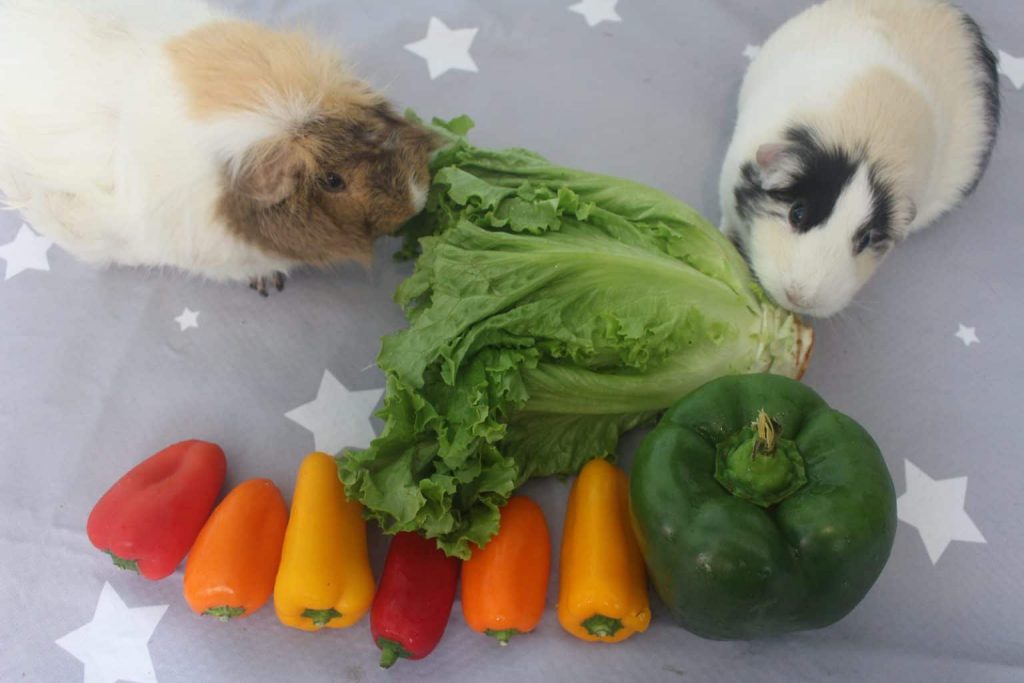
Guinea pigs can also eat things like corn husks, which would typically go to waste if you eat corn in the summer months. It’s a good idea to remove the outer layers of the husks if your corn is not organic because there may be traces of pesticides on it.

In addition, you can collect grass or dandelion leaves from outside if your climate permits. Guinea pigs absolutely love fresh greens from outside!
Just make sure anything you pick for them is untreated. Avoid public parks, boulevards, and neighbor’s yards unless you’re 100% sure it’s safe.
You can also take your guinea pigs outside to graze and get some fresh air when the weather is nice. Make sure they are supervised at all times if you take them out and safely contained in an enclosure or exercise pen.
4. Grow Your Own Vegetables
If you have a garden outside (or space to put a garden), planting your own vegetables can be a great way to save money and feed your guinea pigs (and yourself!) some healthy and organic veggies from your own backyard. (Guinea pig poop also makes for great fertilizer!) Growing your own vegetables can be very rewarding and lots of fun!
If you don’t have outdoor space for a traditional garden, there are still a few things that grow nicely in smaller planters or pots on a balcony or in a window.
Herbs, such as basil or parsley, grow great in pots indoors. You can also grow some grass from seed to keep inside during the winter or dig out a patch of grass and replant it in a pot to bring indoors. Wheatgrass (aka cat grass) is also fast and easy to grow from seed for guinea pigs.

5. Re-Grow Lettuce in Water
Don’t throw out your lettuce stumps! You can actually re-grow a head of lettuce from just the bottom piece that you would throw out anyway. It doesn’t grow back exactly as the original, but it will still give you some fresh new leaves to feed your guinea pigs for free.
To do this, cut off the bottom portion of a head of lettuce, about 2-3 inches high. Place the lettuce stump in a shallow bowl of water, about half an inch deep. Be sure to change the water daily. The new lettuce leaves should be sprouted up and ready for picking in about 2 weeks!
You can also regrow carrot tops with this method. Simply put the cut-off end of a carrot in a shallow bowl, just like above, and you’ll have a fresh supply of carrot greens for your guinea pigs.
6. Substitute Disposable Bedding for Fleece
You can save a lot of money by eliminating or reducing the amount of disposable bedding you use in your guinea pig’s cage.
Fleece is also better for your guinea pig’s lungs, which can help prevent respiratory issues and vet visits down the line.
Fleece bedding can cost more upfront, but it saves a lot of money long-term over constantly buying shavings or paper-based bedding. There are also a few budget-friendly ways to use fleece bedding that won’t break the bank.

All-In-One Fleece Liners

The easiest way to get started with fleece bedding is to buy some all-in-one fleece liners. These come with an absorbent layer inside, so you don’t really have to do anything.
Simply pop them in your cage, and they’re ready to go. You can find some great guinea pig fleece liners on Etsy. It’s also a lot of fun to choose the fleece patterns for your cage.
GuineaDad liners are also really easy and absorbent. Just like the handmade fleece liners, they’re simple and easy to use right off the bat.
If you’re a sewer and want to try your hand at making your own fleece liners, you can find a tutorial below. You’ll need some anti-pill fleece for this project, as well as an absorbent inner layer, such as U-Haul pads. If you’re on a budget, you can sometimes find cheaper fleece fabric in discount bins at fabric stores.
DIY No Sew Cage Liners
Instead of making all-in-one fleece liners, you can also use fleece blankets individually and lay down some absorbent layers underneath. To do this, you’ll need some fleece blankets. You can buy them by the yard from a fabric store or even re-purpose some fleece blankets from thrift stores.
You’ll need to wick the fleece before using it in your guinea pig’s cage. Wicking is basically the process of washing the fleece multiple times so that liquid (pee) is able to soak through the fleece into the absorbent layers underneath. Otherwise, the pee will sit on top of the fleece and soak your guinea pig’s feet. You can read more about this in our article on how to wick fleece in 9 simple steps.
You’ll also need something absorbent to put under the layer of fleece. The fleece serves as a soft top layer for guinea pigs to walk on, but the fleece by itself isn’t very absorbent. For the absorbent layer, you have several options. You can use old towels, U-Haul pads, puppy pee pads (disposable or washable pee pads), washable adult incontinence bed mats, or anything else that is absorbent and easy to wash. This cost could be as little as free if you already have old towels lying around that could be re-purposed into cage liners.
Once you have fleece and an absorbent layer to put underneath, simply lay down the absorbent layer in your cage, cover it with your fleece, and use binder clips to clip the fleece to the sides of your cage. When it comes time to clean the cage, simply unclip the fleece, shake everything out, and toss it in the washer.
How Do You Wash Fleece Without Ruining Your Washer?
Washing fleece in your home washing machine can seem a bit